Florida PDL vs PIP: Understanding Your Two Required Coverages

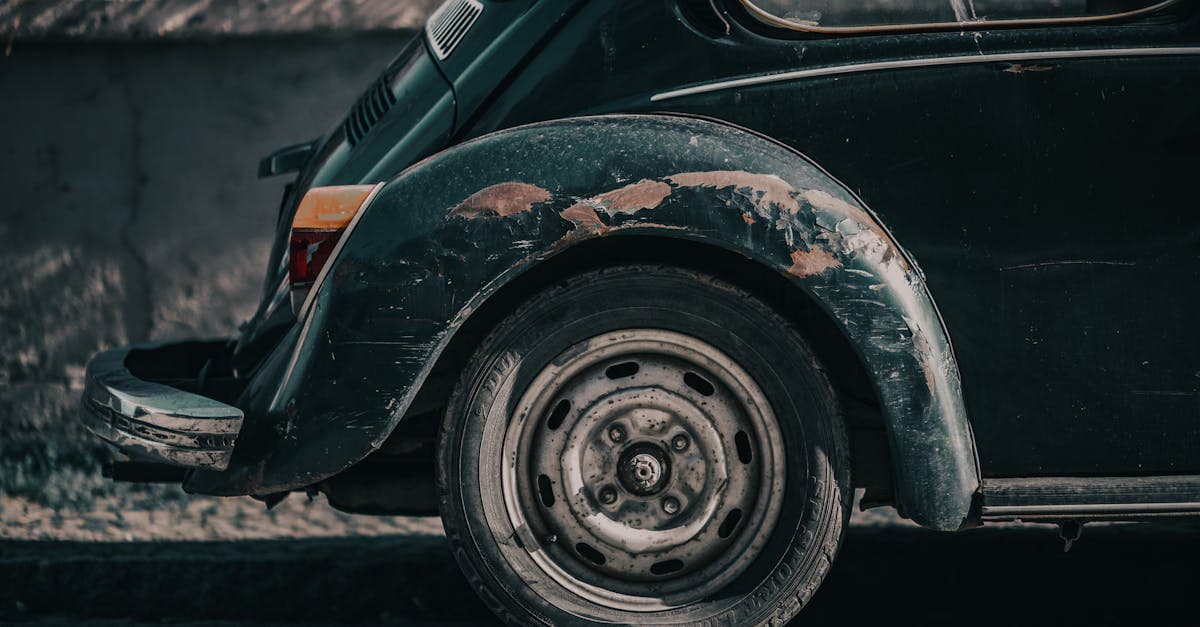
Florida's Property Damage Liability requirement has a history that explains why today's minimum feels so inadequate. When the state established its minimum PDL requirement, the average vehicle cost a fraction of what it costs today. Repair technology was simpler, parts were cheaper, and a $10,000 limit covered most property damage claims with room to spare.
Over the decades, vehicle prices have climbed steadily while Florida's minimum PDL requirement remained static. The average new car price in Florida now exceeds $40,000. Even used vehicles average well above $15,000. Yet the $10,000 PDL floor that protected drivers when cars cost $5,000 has not moved to reflect this reality.
Florida's unique insurance framework adds another layer of context. As a no-fault state for personal injuries, Florida built its auto insurance system around PIP coverage for medical expenses and PDL for property damage — deliberately omitting a bodily injury liability requirement that most other states mandate. This framework means PDL carries even more weight in Florida because it is one of only two required coverages.
Understanding this history helps explain why Florida's PDL minimum is where it is and why simply meeting the legal requirement does not mean you are adequately protected. The law sets a floor, not a recommendation. The coverage you actually need depends on the vehicles and properties you might damage, and those values have far outpaced the statutory minimum.
Florida PDL and the Uninsured Driver Problem
What happened next changed everything. Florida has one of the highest uninsured driver rates in the nation, and this reality represents the unhedged exposure that leaves your savings vulnerable to a single at-fault accident for every insured driver on the road. Understanding how uninsured drivers affect your PDL coverage and your overall protection is essential.
Florida's uninsured driver rate: Estimates suggest that nearly 20 percent of Florida drivers are uninsured, meaning roughly one in five vehicles on the road carries no insurance at all. This rate is among the highest in the country and significantly affects the risk environment for all Florida drivers.
When an uninsured driver hits you: If an uninsured driver damages your property, their lack of PDL means you have no third-party coverage to claim against. Your options are limited to filing a collision claim with your own insurer and paying your deductible, or pursuing the uninsured driver personally — which often yields nothing.
Uninsured Motorist Property Damage coverage: Florida offers optional Uninsured Motorist Property Damage coverage that pays for damage to your vehicle when the at-fault driver has no insurance. This coverage is not required but is strongly recommended given Florida's high uninsured driver rate. It fills a critical gap that PDL alone cannot address.
How uninsured drivers affect PDL costs: The high rate of uninsured drivers in Florida increases costs for insured drivers. Insurers factor uninsured driver risk into premium calculations, and the claims that result from uninsured driver accidents are ultimately absorbed by the insured population through higher rates.
The enforcement gap: Florida suspended its requirement to show proof of insurance at vehicle registration checkpoints, relying instead on random insurance verification and accident-based enforcement. This approach has contributed to the high uninsured rate and the ongoing risk it creates for insured drivers.
Florida's $10,000 PDL Minimum and Why It Falls Short
The story does not end there. Florida requires every registered vehicle to carry at least $10,000 in Property Damage Liability coverage. This minimum represents the unhedged exposure that leaves your savings vulnerable to a single at-fault accident — a coverage floor that has not kept pace with the reality of modern vehicle costs.
How the minimum was set: Florida established its PDL minimum when the average vehicle cost a fraction of today's prices. At the time, $10,000 covered most property damage claims comfortably. Decades of vehicle price inflation have eroded that coverage to the point where it covers barely half of an average property damage claim.
Average claim costs today: The Insurance Information Institute reports average property damage claims exceeding $13,000 nationally. In Florida, where luxury vehicles and expensive commercial traffic are common, typical claims frequently surpass $15,000 to $20,000. A $10,000 limit leaves the at-fault driver exposed for the balance.
Modern vehicle repair costs: Even a moderate rear-end collision involving a vehicle with sensors, cameras, and adaptive cruise control components can produce a repair bill of $8,000 to $15,000. A bumper replacement on a vehicle with parking sensors alone can cost $3,000 to $5,000. The technology that makes modern vehicles safer also makes them expensive to repair.
The exposure gap: When property damage exceeds your PDL limit, you are personally responsible for the difference. The damaged party can pursue you through civil court for the amount your insurance did not cover. This means a $10,000 PDL limit exposes your savings, wages, and other assets to a lawsuit for any property damage above that amount.
National comparison: Florida's $10,000 PDL minimum ranks among the lowest in the country. Many states require $25,000 or more in property damage liability. Florida drivers who carry only the minimum are significantly less protected than drivers in most other states.
Florida PDL and Government Property Damage
What happened next changed everything. When your vehicle damages government-owned property in Florida, the PDL claim follows specific procedures and often involves costs that surprise drivers. Government property is expensive, and the entities that own it have established processes for recovering repair costs.
Traffic signals and lights: A single traffic signal intersection can cost $150,000 to $500,000 to install. Even damaging one signal head and its pole can cost $15,000 to $30,000 to repair. If your PDL limit is the state minimum, a single traffic signal claim can exhaust your coverage and still leave a substantial balance.
Guardrails and barriers: Florida's Department of Transportation bills drivers for guardrail damage based on actual replacement costs plus labor. A standard W-beam guardrail section costs $25 to $35 per linear foot plus posts and installation. A significant guardrail impact involving 100 feet of rail can cost $10,000 or more.
Street signs and signals: Stop signs, speed limit signs, directional signs, and their posts all carry replacement costs. While individual signs are relatively inexpensive, the posts, foundations, and labor add up. A cluster of signs at an intersection can cost $2,000 to $5,000 to replace.
Utility poles: Hitting a utility pole in Florida triggers claims from the pole owner — usually a utility company — for the pole, wiring, transformers, and any service disruption costs. A single wooden utility pole replacement costs $3,000 to $6,000, but if a transformer is mounted on it, the total can reach $20,000 or more.
Government billing process: Government entities send property damage bills directly to your insurer. If the bill exceeds your PDL limit, the government entity can pursue you personally for the remainder. Government agencies are typically persistent in recovering these costs.
How Fault Determination Affects Florida PDL Claims
What happened next changed everything. Florida uses a modified comparative negligence system for property damage claims, which means fault is not always an all-or-nothing determination. Understanding how fault affects your PDL claim helps you navigate the process and manage your financial exposure.
Pure comparative negligence for property damage: Florida applies comparative negligence to property damage claims, meaning each party's fault percentage determines their share of responsibility. If you are 70 percent at fault in an accident that causes $20,000 in property damage, your PDL is responsible for $14,000 of that total.
Fault investigation process: After an accident, both insurers investigate to determine fault percentages. They review the police report, driver statements, witness accounts, physical evidence, and any available camera footage. The investigation may assign fault entirely to one driver or split it between both parties.
How disputed fault affects your claim: If fault is disputed, the claims process takes longer. Your insurer defends your interests by arguing for a lower fault percentage, which reduces your PDL payout. If the dispute cannot be resolved through the claims process, it may proceed to arbitration or litigation.
The impact of traffic citations: A traffic citation issued at the accident scene does not automatically determine insurance fault, but it strongly influences the investigation. A citation for running a red light, failing to yield, or following too closely supports a finding of fault against the cited driver.
Protecting yourself during the investigation: Cooperate fully with your insurer's investigation. Provide truthful statements and all documentation. Do not admit fault at the accident scene — let the insurers and investigators determine fault based on evidence. Your cooperation with your own insurer is required by your policy terms.
Florida PDL and Rental Vehicle Damage
The story does not end there. When you rent a vehicle in Florida, your personal PDL coverage may extend to damage you cause while driving the rental. Understanding how this works prevents you from buying unnecessary coverage at the rental counter while also ensuring you are not left without protection.
Personal policy extension: Most Florida auto insurance policies extend PDL coverage to rental vehicles operated by the policyholder. If you cause an accident while driving a rental car, your PDL pays for damage to other people's property just as it would if you were driving your own vehicle.
What rental counter coverage adds: The rental company offers liability coverage options at the counter. If your personal PDL already extends to rental vehicles, purchasing the rental company's liability coverage may be redundant. However, the rental company's coverage may offer higher limits than your personal PDL, which could be valuable.
Loss damage waiver distinction: The Loss Damage Waiver or Collision Damage Waiver offered at rental counters covers damage to the rental vehicle itself — not damage to other people's property. This is separate from PDL coverage. Your collision insurance, not your PDL, determines whether you need the LDW.
Gaps to watch for: Some personal policies limit rental vehicle coverage to vehicles of a certain value or type. Exotic cars, large trucks, and specialty vehicles may be excluded from your personal policy's rental extension. Read your policy or call your agent before declining rental counter coverage.
Out-of-state and international rentals: Your Florida PDL extends to rental vehicles in other states, but coverage may end at international borders. When renting outside the United States, purchasing the rental company's liability coverage is typically necessary because your personal policy does not extend internationally.
Florida PDL and Hit-and-Run Accidents
What happened next changed everything. Hit-and-run accidents present a unique challenge for Florida's PDL system because the at-fault driver's PDL coverage cannot be accessed without identifying the driver. Understanding the coverage implications helps victims and at-fault drivers alike.
When you are the victim: If a hit-and-run driver damages your property and cannot be identified, you cannot file a claim against their PDL because you do not know who they are or whether they have insurance. Your options are to file a claim under your own collision coverage and pay your deductible, or file under Uninsured Motorist Property Damage coverage if you carry it.
Florida's hit-and-run laws: Leaving the scene of an accident involving property damage in Florida is a second-degree misdemeanor punishable by up to 60 days in jail and a $500 fine. If the accident involves injury or death, the penalties are significantly more severe. These legal consequences exist independently of any insurance implications.
Your PDL after a hit-and-run you commit: If you leave the scene but are later identified, your PDL still covers the property damage you caused — assuming you have insurance. However, your insurer may investigate whether the hit-and-run constitutes a policy violation. Most policies require you to cooperate in the claims process, and fleeing the scene may complicate that obligation.
Reporting and documentation: If you are the victim of a hit-and-run, file a police report immediately. Note any details about the other vehicle — make, model, color, partial plate number. Check for nearby surveillance cameras that may have captured the incident. This information helps law enforcement identify the at-fault driver and allows you to access their PDL coverage.
Preventing hit-and-run financial damage: Carrying Uninsured Motorist Property Damage coverage is the best financial protection against hit-and-run property damage in Florida. This coverage pays for your vehicle damage when the at-fault driver cannot be identified or has no insurance.
The Dangerous Gaps in Florida PDL Coverage
The story does not end there. Florida's PDL coverage structure contains gaps that represent the unhedged exposure that leaves your savings vulnerable to a single at-fault accident for every driver on the road. Identifying these gaps is the first step toward closing them.
The limit gap: The most significant gap is the difference between your PDL limit and actual property damage costs. With the minimum at $10,000 and average claims exceeding $13,000, most minimum-coverage drivers face a gap on virtually any claim involving a newer vehicle.
The multi-vehicle gap: Your PDL limit applies to the total property damage from one accident, not per vehicle. If you cause a three-car pileup with $8,000 in damage to each vehicle — $24,000 total — your $10,000 PDL limit covers less than half. You are personally liable for $14,000.
The no-collision gap: Florida does not require collision coverage. Drivers carrying only PDL and PIP have no coverage for their own vehicle damage in any accident, regardless of fault. If another driver hits you and they are also underinsured, your own repairs come entirely out of pocket.
The no-BIL gap: Florida does not require Bodily Injury Liability coverage. If you cause an accident that injures someone seriously enough to exceed PIP coverage, you have no liability protection for their medical bills, lost wages, or pain and suffering. This gap can result in lawsuits for hundreds of thousands of dollars.
The uninsured motorist gap: Nearly one in five Florida drivers is uninsured or underinsured. If one of these drivers damages your property, their lack of coverage becomes your problem unless you carry Uninsured Motorist Property Damage coverage. Florida does not require this coverage, creating yet another gap.
Florida's $10,000 PDL Minimum and Why It Falls Short
The story does not end there. Florida requires every registered vehicle to carry at least $10,000 in Property Damage Liability coverage. This minimum represents the unhedged exposure that leaves your savings vulnerable to a single at-fault accident — a coverage floor that has not kept pace with the reality of modern vehicle costs.
How the minimum was set: Florida established its PDL minimum when the average vehicle cost a fraction of today's prices. At the time, $10,000 covered most property damage claims comfortably. Decades of vehicle price inflation have eroded that coverage to the point where it covers barely half of an average property damage claim.
Average claim costs today: The Insurance Information Institute reports average property damage claims exceeding $13,000 nationally. In Florida, where luxury vehicles and expensive commercial traffic are common, typical claims frequently surpass $15,000 to $20,000. A $10,000 limit leaves the at-fault driver exposed for the balance.
Modern vehicle repair costs: Even a moderate rear-end collision involving a vehicle with sensors, cameras, and adaptive cruise control components can produce a repair bill of $8,000 to $15,000. A bumper replacement on a vehicle with parking sensors alone can cost $3,000 to $5,000. The technology that makes modern vehicles safer also makes them expensive to repair.
The exposure gap: When property damage exceeds your PDL limit, you are personally responsible for the difference. The damaged party can pursue you through civil court for the amount your insurance did not cover. This means a $10,000 PDL limit exposes your savings, wages, and other assets to a lawsuit for any property damage above that amount.
National comparison: Florida's $10,000 PDL minimum ranks among the lowest in the country. Many states require $25,000 or more in property damage liability. Florida drivers who carry only the minimum are significantly less protected than drivers in most other states.
The Bottom Line on Florida PDL Coverage
Think of Florida PDL as the liability insurance policy that hedges your personal wealth against property damage you cause on the road. It stands between your personal finances and the unhedged exposure that leaves your savings vulnerable to a single at-fault accident. Without adequate PDL, every at-fault accident becomes a direct hit to your bank account, your savings, and potentially your wages.
The coverage is essential but not self-optimizing. You must choose the right limit, understand the exclusions, and pair PDL with other coverages to build complete protection. Florida's minimum requirements leave significant gaps that only informed, proactive coverage decisions can close.
Master the fundamentals — what PDL covers, how limits work, and what adequate means for your situation — and you will have the financial confidence to drive Florida's roads knowing that a single accident will not become a financial catastrophe.
Continue reading

The 10 Things You Must Compare Before Choosing an Insurance Policy
Premium price is just one of at least ten critical factors that determine whether an insurance policy delivers genuine value. Ignoring any of these factors can leave you underinsured or overpaying.
Policy Checkup After Having a Baby: Protecting Your Growing Family
A new baby means new financial responsibilities, life insurance needs, and coverage adjustments. A policy checkup after your child arrives ensures your family's protection matches its new size.
Assignment of Benefits vs Direction to Pay: Key Differences Explained
A direction to pay tells the insurer to send the check to your contractor. An AOB transfers your legal claim rights entirely. The distinction matters enormously for your protection.