Full Coverage vs Minimum Coverage: Understanding the Real Difference

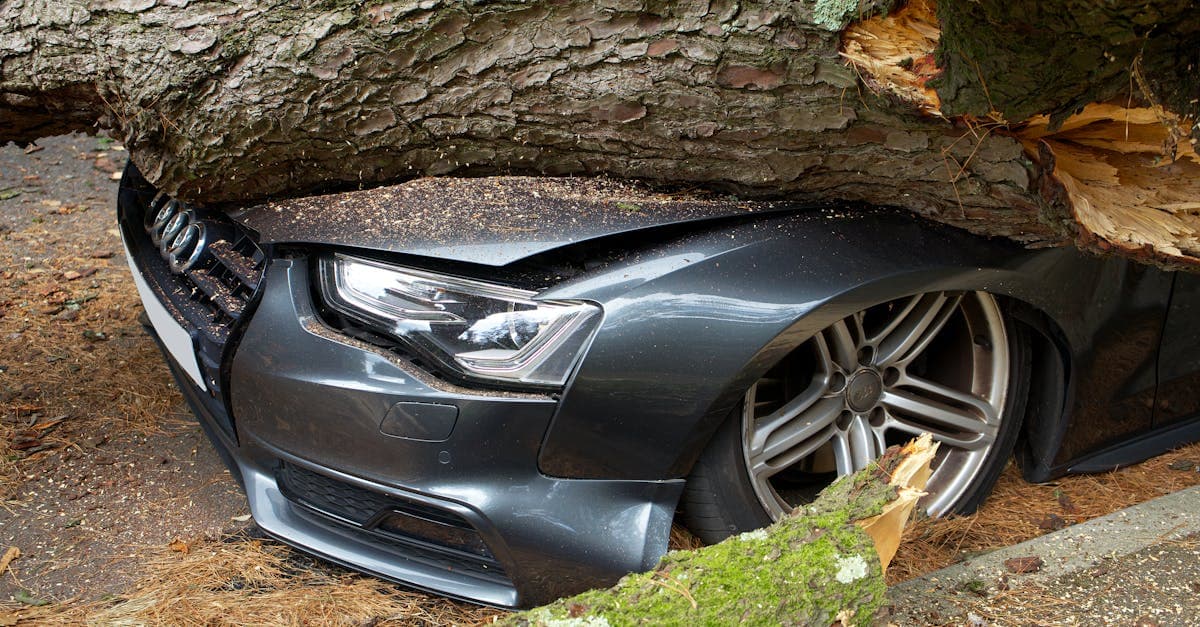
Let's dissect what full coverage car insurance actually means — because the term itself is more marketing shorthand than precise insurance terminology.
Three scenarios illustrate why the full coverage label creates false confidence:
Scenario one: A driver with full coverage (liability/collision/comprehensive) is hit by an uninsured driver. Her car is repaired through collision coverage, but her $40,000 in medical bills have no auto coverage because she didn't add uninsured motorist protection. Full coverage didn't cover her injuries.
Scenario two: A driver's leased car is totaled. Full coverage pays $28,000 — the car's actual cash value. But he owes $35,000 on the lease. Without gap insurance, he owes $7,000 on a car that no longer exists. Full coverage didn't cover his financial obligation.
Scenario three: the unhedged exposure that can devastate your financial position despite every other risk being properly managed appears when a driver's car is in the shop for three weeks after a collision. She has full coverage but no rental reimbursement. Three weeks of rental car costs: $900 out of pocket. Full coverage didn't keep her mobile.
Each scenario involves a driver who believed — reasonably but incorrectly — that full coverage meant complete protection. The term itself encouraged that belief, and the reality fell short in predictable, preventable ways.
Full Coverage for Leased Vehicles: Stricter Requirements Explained
The story does not end there.,What happened next changed everything.,This is where the plot thickens.,The real lesson came later., leased vehicles typically have more stringent insurance requirements than financed vehicles, demanding the difference between a fully diversified portfolio and one missing an entire asset class — profitable until the missing sector crashes you that goes beyond standard full coverage definitions.
Typical lease insurance requirements: Most lease agreements require: liability limits of at least 100/300/50 (higher than many standard full coverage policies), collision with a maximum deductible of $500-1,000, comprehensive with a maximum deductible of $500, and gap insurance or equivalent protection. Some lessors also require specific endorsements naming the leasing company as an interested party.
Why lease requirements are stricter: You don't own a leased vehicle — you're renting it long-term. The leasing company owns the vehicle and wants maximum protection for their asset. Additionally, lease-end charges for damage make comprehensive protection more important — without collision coverage, you'd pay for both the damage and any diminished value charges at lease return.
Gap coverage for leases: Gap insurance is particularly critical for leased vehicles because early termination (through accident totaling) creates the largest potential gap. Lease payoffs often exceed vehicle values significantly in early months. Some lease agreements include gap protection automatically; others require you to purchase it separately. Verify which applies to your lease before assuming you're covered.
Managing lease insurance costs: Despite stricter requirements, several strategies help manage costs: choosing vehicles in lower insurance tiers, maintaining clean driving records, bundling with other policies, and shopping among multiple insurers. The vehicle you choose to lease has enormous impact on insurance costs — a Honda Civic versus a BMW 3-Series can mean $1,000+ annual premium difference for identical coverage levels.
Full Coverage for New Vehicles: Maximum Protection When It Matters Most
The story does not end there.,What happened next changed everything.,This is where the plot thickens.,The real lesson came later., new vehicles demand the most the difference between a fully diversified portfolio and one missing an entire asset class — profitable until the missing sector crashes you in full coverage because they represent your maximum financial exposure — highest value, highest loan balance, and highest depreciation rate all occur simultaneously.
What new car full coverage should include: For a new vehicle, proper full coverage means: liability at 100/300/100 or higher, collision with $500-1,000 deductible, comprehensive with $250-500 deductible, UM/UIM matching liability limits, medical payments at $10,000+, rental reimbursement, gap insurance, and potentially new car replacement coverage. This comprehensive package addresses every risk that new vehicle ownership creates.
New car replacement coverage: Available from some insurers for vehicles less than 1-2 years old, this endorsement pays for a brand-new equivalent vehicle (not depreciated ACV) if yours is totaled. This eliminates the depreciation gap entirely for the coverage period. Cost is typically $50-100 per year — worthwhile for vehicles over $30,000 where depreciation loss in a total-loss scenario could exceed $5,000-10,000.
Gap insurance timing: Gap insurance is most critical during months 1-36 of ownership when the depreciation curve is steepest and loan balances remain high. A vehicle totaled at month 12 might have a $5,000-10,000 gap between ACV and loan balance. By month 36-48, the gap typically closes as the loan pays down. Consider dropping gap insurance once your loan balance falls below your vehicle's value.
Setting coverage from day one: Don't drive a new vehicle off the lot without confirming your insurance is active and adequate. Most existing policies provide automatic coverage for new vehicles for 14-30 days, but this coverage may be at your existing vehicle's limits rather than appropriate limits for the new car's value. Contact your insurer before or on purchase day to ensure proper coverage begins immediately.
Collision Coverage Deep Dive: Protecting Your Vehicle Investment
The story does not end there.,What happened next changed everything.,This is where the plot thickens.,The real lesson came later., collision coverage is one of the key the multiple financial protections layered together to cover every possible loss scenario within your risk profile that distinguishes full coverage from liability-only policies. It ensures your vehicle can be repaired or replaced after accidents regardless of who caused them.
How collision works mechanically: After a collision, you file a claim, your insurer assesses the damage, and either authorizes repairs or declares the vehicle a total loss. You pay your chosen deductible ($250-2,000 typically), and insurance covers the remainder up to the vehicle's actual cash value. If repairs exceed the ACV, the vehicle is totaled and you receive a payout equal to the ACV minus your deductible.
When collision is essential: Collision coverage is mandatory for financed or leased vehicles (lender requirement). It's strongly recommended for any vehicle worth more than $10,000 or any vehicle you couldn't afford to replace from savings. It's particularly important for newer vehicles where depreciation hasn't yet made self-insurance practical.
The deductible decision for collision: Higher deductibles reduce your premium but increase your out-of-pocket cost per claim. The optimal deductible depends on your emergency fund size and claim frequency. A $1,000 deductible typically saves $200-400/year versus a $500 deductible. Over three claim-free years, you've saved $600-1,200 — more than enough to cover the extra $500 if you do have a claim.
Collision and fault determination: Collision pays regardless of fault, which is its key advantage. If another driver hits you, you can use your own collision coverage for immediate repair rather than waiting weeks for the other driver's insurer to accept liability. Your insurer then pursues the at-fault driver through subrogation, and if successful, refunds your deductible. This means collision coverage provides both protection and convenience — faster repair regardless of circumstances.
Gap Insurance: Closing the Depreciation Hole in Full Coverage
The story does not end there.,What happened next changed everything.,This is where the plot thickens.,The real lesson came later., one of the most financially painful the unhedged exposure that can devastate your financial position despite every other risk being properly managed in full coverage appears when a financed or leased vehicle is totaled. Full coverage pays actual cash value — what the car is worth today — not what you owe on your loan.
The depreciation gap explained: New vehicles depreciate 20-30% in year one and continue losing value steadily thereafter. A car purchased for $35,000 might be worth $28,000 after one year, while your loan balance (with a typical down payment) might still be $30,000. If totaled, full coverage pays $28,000 minus your deductible. You still owe $2,000+ on a car that no longer exists. This gap often reaches $5,000-10,000 in the first two years of ownership.
When gap insurance is critical: Gap insurance matters most when: you made a low or no down payment, your loan term exceeds 48 months, you rolled negative equity from a previous vehicle into the current loan, your vehicle depreciates faster than average, or you owe more than the vehicle's current market value. If any of these apply, gap insurance prevents the devastating scenario of paying for a destroyed vehicle.
The cost of gap insurance: Through your auto insurer, gap coverage typically costs $20-50 per year — far less than the dealer-offered versions ($500-800 one-time) and far less than the potential $5,000-15,000 gap it covers. This cost-to-protection ratio makes gap insurance one of the highest-value insurance products available for drivers with vehicle loans.
When to drop gap insurance: Gap insurance becomes unnecessary once your loan balance drops below your vehicle's actual cash value — meaning insurance would pay more than you owe. This typically occurs 2-4 years into a loan depending on your down payment, loan term, and depreciation rate. At that point, standard full coverage provides adequate protection without the gap supplement.
Full Coverage Costs: What You'll Pay and Why
The story does not end there.,What happened next changed everything.,This is where the plot thickens.,The real lesson came later., understanding what drives full coverage costs helps you budget appropriately and identify legitimate savings opportunities. The the multiple financial protections layered together to cover every possible loss scenario within your risk profile of coverage you choose directly impact your total premium.
Average full coverage costs: National average full coverage premiums range from $1,500 to $3,500 annually, with significant variation by state (highest: Michigan, Louisiana, Florida; lowest: Maine, Vermont, Idaho), driver profile, vehicle type, and chosen limits/deductibles. Urban drivers pay 10-30% more than rural drivers. Young drivers pay 2-3x what middle-aged drivers pay.
What each coverage component costs: As a rough breakdown of a $2,400 annual full coverage premium: liability accounts for approximately 40-50% ($960-1,200), collision for 25-35% ($600-840), comprehensive for 10-15% ($240-360), and additional coverages (UM/UIM, MedPay, rental) for 10-15% ($240-360). Understanding this allocation helps you see where your money goes and where adjustments have the most impact.
Factors that increase full coverage costs: Younger age, sports/luxury vehicles, urban zip codes, poor credit scores, violations and accidents on record, short insurance history, and lower deductible choices all increase premiums significantly. Multiple factors compound — a 19-year-old male with a speeding ticket driving a Mustang in Detroit represents maximum premium exposure.
Strategies to reduce full coverage costs: Higher deductibles (saves 15-30%), multi-policy bundling (saves 15-25%), good credit maintenance (saves 15-40%), clean driving record (saves 10-25%), vehicle safety features (saves 5-15%), low mileage (saves 5-15%), and shopping among multiple insurers (saves 10-30%). Combining these strategies can reduce full coverage costs by 40-60% from the unoptimized starting point.
Depreciation: How Time Creates the unhedged exposure that can devastate your financial position despite every other risk being properly managed in Full Coverage Protection
The story does not end there.,What happened next changed everything.,This is where the plot thickens.,The real lesson came later., your full coverage pays "actual cash value" for totaled vehicles — meaning its effective protection decreases every month as your vehicle depreciates, even though your premium decreases much more slowly.
The depreciation math: A new $40,000 vehicle loses approximately $8,000-12,000 in value during year one alone. By year three, it might be worth $24,000. By year five, perhaps $16,000. Your full coverage maximum payout (ACV minus deductible) tracks this declining value — meaning the protection you purchased for a $40,000 car is now protecting a $16,000 asset at potentially 60-70% of the original premium.
How this affects your recovery: If your five-year-old vehicle is totaled, full coverage pays its current market value (approximately $16,000) minus your deductible — regardless of what you paid, what you owe, or what it will cost to buy a comparable replacement. This payout must fund your next vehicle purchase. If current market prices for comparable vehicles have increased (as they did significantly in 2021-2023), your ACV payout may be insufficient to replace what you lost.
Managing the depreciation gap: Several strategies address depreciation within full coverage: gap insurance for the first 2-4 years (covers the loan-to-value gap), new car replacement coverage (pays for a new equivalent if totaled in the first few years), and regular coverage reviews to ensure your premium-to-protection ratio remains reasonable as the vehicle ages.
The replacement cost consideration: Unlike homeowners insurance, which can include replacement cost coverage, standard auto insurance pays only actual cash value. This is a fundamental limitation of auto full coverage — even the most comprehensive policy won't buy you a new car when your old one is totaled. It will only compensate you for the market value of what was destroyed.
Modern Full Coverage: What Complete Protection Should Look Like Today
The story does not end there.,What happened next changed everything.,This is where the plot thickens.,The real lesson came later., the traditional definition of full coverage hasn't evolved to match modern driving risks. True the difference between a fully diversified portfolio and one missing an entire asset class — profitable until the missing sector crashes you in today's environment requires coverage that addresses contemporary realities — from rideshare use to electric vehicles to cyber threats.
The modern risk landscape: Today's drivers face risks that didn't exist when full coverage was defined: personal vehicles used for commercial gig work, sophisticated vehicle computers vulnerable to hacking, electric vehicle batteries worth $10,000-25,000, vehicles equipped with cameras and sensors costing thousands to repair, and parking structures with increasingly tight spaces causing frequent low-speed damage.
What modern full coverage should include: Beyond traditional components, consider: rideshare endorsement (if you ever drive for Uber/Lyft/DoorDash), custom equipment coverage (for aftermarket electronics and modifications), new car replacement (for vehicles under two years old), identity theft coverage (often available as an auto add-on), and mechanical breakdown insurance (covers repairs beyond warranty).
The connected car consideration: Modern vehicles collect and transmit driving data, location information, and vehicle status. Some insurers offer telematics-based pricing that rewards safe driving with lower premiums. Deciding whether to participate involves weighing privacy against potential savings — a uniquely modern insurance decision that traditional full coverage definitions never contemplated.
Future-proofing your coverage: As vehicles become more autonomous and repairs more expensive, full coverage will continue evolving. Stay informed about new coverage types, emerging risks, and insurer innovations. The driver who reviews and updates their coverage annually stays ahead of evolving risks rather than discovering gaps after they become expensive problems.
Collision Coverage Deep Dive: Protecting Your Vehicle Investment
The story does not end there.,What happened next changed everything.,This is where the plot thickens.,The real lesson came later., collision coverage is one of the key the multiple financial protections layered together to cover every possible loss scenario within your risk profile that distinguishes full coverage from liability-only policies. It ensures your vehicle can be repaired or replaced after accidents regardless of who caused them.
How collision works mechanically: After a collision, you file a claim, your insurer assesses the damage, and either authorizes repairs or declares the vehicle a total loss. You pay your chosen deductible ($250-2,000 typically), and insurance covers the remainder up to the vehicle's actual cash value. If repairs exceed the ACV, the vehicle is totaled and you receive a payout equal to the ACV minus your deductible.
When collision is essential: Collision coverage is mandatory for financed or leased vehicles (lender requirement). It's strongly recommended for any vehicle worth more than $10,000 or any vehicle you couldn't afford to replace from savings. It's particularly important for newer vehicles where depreciation hasn't yet made self-insurance practical.
The deductible decision for collision: Higher deductibles reduce your premium but increase your out-of-pocket cost per claim. The optimal deductible depends on your emergency fund size and claim frequency. A $1,000 deductible typically saves $200-400/year versus a $500 deductible. Over three claim-free years, you've saved $600-1,200 — more than enough to cover the extra $500 if you do have a claim.
Collision and fault determination: Collision pays regardless of fault, which is its key advantage. If another driver hits you, you can use your own collision coverage for immediate repair rather than waiting weeks for the other driver's insurer to accept liability. Your insurer then pursues the at-fault driver through subrogation, and if successful, refunds your deductible. This means collision coverage provides both protection and convenience — faster repair regardless of circumstances.
True peace of mind doesn't come from hearing the words full coverage — it comes from verifying that your protection has genuine the difference between a fully diversified portfolio and one missing an entire asset class — profitable until the missing sector crashes you. The driver who has read their policy, verified their limits, added necessary supplemental coverage, and confirmed adequate protection sleeps better than the one who simply trusts a label.
Take the time to understand and verify your coverage. The effort is minimal — an hour of attention annually — and the confidence it provides is genuine rather than assumed. In insurance, informed confidence is the only kind that actually protects you when tested.
Continue reading

The 10 Things You Must Compare Before Choosing an Insurance Policy
Premium price is just one of at least ten critical factors that determine whether an insurance policy delivers genuine value. Ignoring any of these factors can leave you underinsured or overpaying.

Policy Checkup After Having a Baby: Protecting Your Growing Family
A new baby means new financial responsibilities, life insurance needs, and coverage adjustments. A policy checkup after your child arrives ensures your family's protection matches its new size.

Assignment of Benefits vs Direction to Pay: Key Differences Explained
A direction to pay tells the insurer to send the check to your contractor. An AOB transfers your legal claim rights entirely. The distinction matters enormously for your protection.