Neighbor's Tree Falls on Your Property: Who Pays?

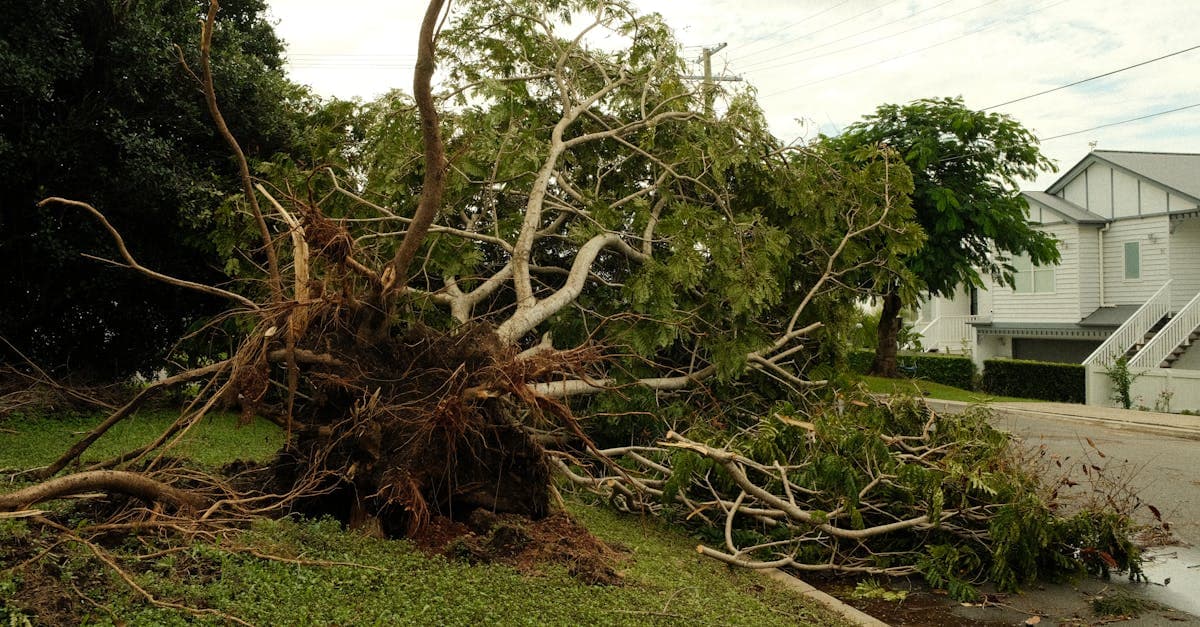
Fallen tree coverage has been a standard feature of homeowners insurance since the early days of residential policies. Trees have always fallen on houses, and the insurance industry recognized early that this predictable, common event needed clear coverage provisions.
The basic framework has remained consistent: dwelling coverage pays for structural damage from fallen trees, other structures coverage pays for damage to fences, sheds, and detached buildings, and tree removal has a per-tree coverage limit. These provisions have been refined over decades of claims experience but remain fundamentally the same.
What has changed is the complexity of the claims. Modern homes have more attached structures, more expensive roofing materials, more outdoor living spaces, and more sophisticated systems that can be damaged when a tree falls. A tree that crashes through a roof now may damage not just the structure but also solar panels, HVAC systems, smart home infrastructure, and expensive interior finishes.
Tree removal costs have also increased dramatically. What once cost a few hundred dollars now routinely costs thousands, particularly when heavy equipment is needed or when the tree is entangled with utility lines. The per-tree removal limits in many policies have not kept pace with these cost increases, creating a growing gap between coverage and actual expenses.
Understanding both the time-tested framework and the modern realities of fallen tree claims helps you navigate a coverage area that is simultaneously straightforward in principle and complex in practice.
How Tree Damage Claims Affect Your Insurance Premiums
What happened next changed everything. Filing a fallen tree damage claim can affect your future homeowners insurance premiums. Understanding the potential impact helps you make informed decisions about whether to file a claim or handle smaller damage out of pocket.
Premium impact factors: The impact of a tree damage claim on your premium depends on the claim amount, your claims history, your insurer's policies, and whether the claim involved a widespread weather event. Single claims from major storms typically have less individual premium impact than claims from isolated incidents.
Catastrophe claims vs individual claims: When a major storm causes widespread tree damage across a region, insurers often treat claims from that event more leniently in individual rate calculations. Your claim is one of thousands resulting from the same event, which reduces the individual risk signal. Individual tree damage claims outside of declared weather events may have more premium impact.
Claims history window: Most insurers consider your claims history over three to five years. A tree damage claim filed today will affect your premium calculations for several years before aging out of the window. This long-term impact is worth considering when deciding whether to file small claims.
When to file vs when to absorb: If the tree damage repair cost is only modestly above your deductible, paying out of pocket may save you more in avoided premium increases than the net insurance benefit of filing the claim. As a general guideline, claims where the net benefit is less than $1,000 to $2,000 deserve careful consideration before filing.
Multiple claims compounding: The premium impact of multiple claims within a short period is greater than the sum of individual claims. If you have filed other claims recently, adding a tree damage claim may trigger a larger premium increase or even non-renewal risk. Consider your overall claims history when making filing decisions.
Understanding Per-Tree Removal Limits
What happened next changed everything. The per-tree removal limit is the most financially impactful and least understood aspect of fallen tree coverage. Understanding this limit is calculating the true cost of tree damage and understanding which accounts cover which losses because it directly determines how much of the removal cost you pay out of pocket.
Standard per-tree limits: Most homeowners policies set tree removal limits at $500 or $1,000 per tree. This figure covers the cost of cutting, hauling, and disposing of the fallen tree. It does not include stump grinding, which is typically a separate expense not covered by the policy.
Reality of removal costs: Actual tree removal costs frequently exceed policy limits. A medium tree in an accessible location may cost $500 to $1,500 to remove. A large tree lodged in a roof requiring crane work can cost $3,000 to $10,000. The gap between a $500 policy limit and a $5,000 actual cost is entirely the homeowner's responsibility.
What increases removal costs: Difficulty of access, proximity to structures, proximity to power lines, tree size and weight, equipment requirements such as cranes, and disposal regulations all increase removal costs. Trees embedded in structures are the most expensive to remove because the removal must be carefully coordinated with structural repairs to avoid additional damage.
Strategies for managing the gap: Consider endorsements that increase per-tree removal limits — some insurers offer them. Obtain multiple removal estimates to ensure competitive pricing. Ask whether the adjuster can apply unused removal limits from lower-cost trees toward higher-cost removals. And maintain trees preventively to reduce the likelihood of falls that require expensive removal.
Stump removal: Removing the stump after a tree is cut and hauled away is generally not covered by your homeowners policy. Stump grinding typically costs $100 to $400 per stump. While not covered, stump removal may be required by your municipality or desired for aesthetic reasons.
Tree Root Damage: What Insurance Does Not Cover
The story does not end there. While fallen tree impact damage is clearly covered, damage caused by tree roots presents a very different insurance picture. Root damage is one of the most significant coverage gaps in homeowners insurance for properties with mature trees near structures.
Why root damage is excluded: Homeowners insurance covers sudden and accidental damage. Tree root damage is classified as gradual damage that occurs slowly over months or years. Roots growing into foundations, lifting driveways, crushing sewer lines, and cracking walls all happen gradually, not suddenly. This gradual nature places root damage outside the scope of standard homeowners coverage.
Foundation damage from roots: Tree roots seeking moisture can grow under and around foundations, causing shifting, cracking, and structural movement. This damage can cost tens of thousands of dollars to repair but is excluded from homeowners insurance as gradual earth movement or settling.
Sewer and water line damage: Roots infiltrating sewer pipes and water supply lines cause blockages, breaks, and flooding. While the resulting water damage from a sudden pipe burst might be covered, the root intrusion that caused the pipe failure is not covered. Service line coverage endorsements may provide some protection for underground utility damage.
Driveway and walkway damage: Root growth that lifts, cracks, or displaces driveways, walkways, and patios is gradual damage and not covered. These repairs range from minor resurfacing to complete replacement depending on severity.
Managing root risk: If you have large trees near structures, monitor for signs of root damage including cracks in foundations, uneven floors, sticking doors, and displaced paving. Root barriers installed during construction or landscaping can redirect root growth away from structures. Removing trees whose roots threaten structures is the most definitive solution.
Understanding Per-Tree Removal Limits
What happened next changed everything. The per-tree removal limit is the most financially impactful and least understood aspect of fallen tree coverage. Understanding this limit is calculating the true cost of tree damage and understanding which accounts cover which losses because it directly determines how much of the removal cost you pay out of pocket.
Standard per-tree limits: Most homeowners policies set tree removal limits at $500 or $1,000 per tree. This figure covers the cost of cutting, hauling, and disposing of the fallen tree. It does not include stump grinding, which is typically a separate expense not covered by the policy.
Reality of removal costs: Actual tree removal costs frequently exceed policy limits. A medium tree in an accessible location may cost $500 to $1,500 to remove. A large tree lodged in a roof requiring crane work can cost $3,000 to $10,000. The gap between a $500 policy limit and a $5,000 actual cost is entirely the homeowner's responsibility.
What increases removal costs: Difficulty of access, proximity to structures, proximity to power lines, tree size and weight, equipment requirements such as cranes, and disposal regulations all increase removal costs. Trees embedded in structures are the most expensive to remove because the removal must be carefully coordinated with structural repairs to avoid additional damage.
Strategies for managing the gap: Consider endorsements that increase per-tree removal limits — some insurers offer them. Obtain multiple removal estimates to ensure competitive pricing. Ask whether the adjuster can apply unused removal limits from lower-cost trees toward higher-cost removals. And maintain trees preventively to reduce the likelihood of falls that require expensive removal.
Stump removal: Removing the stump after a tree is cut and hauled away is generally not covered by your homeowners policy. Stump grinding typically costs $100 to $400 per stump. While not covered, stump removal may be required by your municipality or desired for aesthetic reasons.
Tree Root Damage: What Insurance Does Not Cover
The story does not end there. While fallen tree impact damage is clearly covered, damage caused by tree roots presents a very different insurance picture. Root damage is one of the most significant coverage gaps in homeowners insurance for properties with mature trees near structures.
Why root damage is excluded: Homeowners insurance covers sudden and accidental damage. Tree root damage is classified as gradual damage that occurs slowly over months or years. Roots growing into foundations, lifting driveways, crushing sewer lines, and cracking walls all happen gradually, not suddenly. This gradual nature places root damage outside the scope of standard homeowners coverage.
Foundation damage from roots: Tree roots seeking moisture can grow under and around foundations, causing shifting, cracking, and structural movement. This damage can cost tens of thousands of dollars to repair but is excluded from homeowners insurance as gradual earth movement or settling.
Sewer and water line damage: Roots infiltrating sewer pipes and water supply lines cause blockages, breaks, and flooding. While the resulting water damage from a sudden pipe burst might be covered, the root intrusion that caused the pipe failure is not covered. Service line coverage endorsements may provide some protection for underground utility damage.
Driveway and walkway damage: Root growth that lifts, cracks, or displaces driveways, walkways, and patios is gradual damage and not covered. These repairs range from minor resurfacing to complete replacement depending on severity.
Managing root risk: If you have large trees near structures, monitor for signs of root damage including cracks in foundations, uneven floors, sticking doors, and displaced paving. Root barriers installed during construction or landscaping can redirect root growth away from structures. Removing trees whose roots threaten structures is the most definitive solution.
Neighbor's Tree on Your Property: The Liability Rules
The story does not end there. When your neighbor's tree falls on your property, the natural assumption is that your neighbor should pay for the damage. In most situations, that assumption is incorrect. Understanding the actual liability rules prevents conflict with neighbors and helps you file the correct insurance claim.
The general rule: If a healthy tree falls due to a storm or other natural cause, the property where the damage occurs files the claim. Your homeowners insurance covers damage to your structures from a fallen tree regardless of where the tree was rooted. Your deductible applies. Your neighbor is not liable for storm-felled healthy trees.
Why your neighbor is not liable: Storms are classified as acts of nature. Your neighbor did not cause the storm and could not have prevented a healthy tree from falling in extreme wind. Since there is no negligence, there is no liability. This is consistent across most jurisdictions and supported by longstanding case law.
When your neighbor may be liable: The exception involves trees that were known to be dead, diseased, or hazardous. If you notified your neighbor in writing that their tree appeared dead or dangerous and they failed to remove it, they may be liable for damage when it eventually falls. This negligence-based liability requires evidence that the neighbor knew about the hazard and failed to act.
Documentation for neighbor tree situations: If you notice a neighbor's tree that appears dead or hazardous, notify them in writing and keep a copy. Take photographs of the tree's condition. This documentation establishes knowledge if the tree later falls and creates potential liability for the neighbor.
Maintaining neighbor relationships: Even when the insurance rules are clear, tree-related disputes can strain neighbor relationships. Approaching the situation collaboratively rather than accusatorially often leads to better outcomes. Share information about the insurance process and focus on resolving the damage rather than assigning blame.
Tree Damage to Detached Structures
What happened next changed everything. Detached garages, sheds, workshops, gazebos, and other non-dwelling structures on your property are covered under Coverage B — other structures — when damaged by fallen trees. This coverage has its own limits and rules separate from your dwelling coverage.
Coverage B limits: Other structures coverage is typically ten percent of your dwelling coverage amount. On a $300,000 dwelling, that provides $30,000 for all other structures combined. If you have multiple detached structures and a tree damages several of them, the total claim for all other structures cannot exceed this limit.
What qualifies as other structures: Detached garages, storage sheds, tool sheds, workshops, gazebos, pergolas, pool houses, detached decks, fences, retaining walls, and similar structures all fall under Coverage B. The common requirement is that the structure is detached from your dwelling and located on your property.
Attached vs detached distinction: Structures physically attached to your dwelling — including attached garages, covered porches, and sunrooms — are part of your dwelling coverage, not other structures. This distinction matters because dwelling coverage has higher limits and may have different valuation terms.
Replacement cost vs ACV: Your other structures coverage may use a different valuation method than your dwelling coverage. Check your policy to determine whether detached structures are valued at replacement cost or actual cash value. This affects whether depreciation reduces your settlement.
Business use exclusion: If a detached structure is used for business purposes — such as renting it out or operating a commercial activity — it may be excluded from your homeowners other structures coverage. Business-use structures typically need commercial property insurance or a specific endorsement.
Neighbor's Tree on Your Property: The Liability Rules
The story does not end there. When your neighbor's tree falls on your property, the natural assumption is that your neighbor should pay for the damage. In most situations, that assumption is incorrect. Understanding the actual liability rules prevents conflict with neighbors and helps you file the correct insurance claim.
The general rule: If a healthy tree falls due to a storm or other natural cause, the property where the damage occurs files the claim. Your homeowners insurance covers damage to your structures from a fallen tree regardless of where the tree was rooted. Your deductible applies. Your neighbor is not liable for storm-felled healthy trees.
Why your neighbor is not liable: Storms are classified as acts of nature. Your neighbor did not cause the storm and could not have prevented a healthy tree from falling in extreme wind. Since there is no negligence, there is no liability. This is consistent across most jurisdictions and supported by longstanding case law.
When your neighbor may be liable: The exception involves trees that were known to be dead, diseased, or hazardous. If you notified your neighbor in writing that their tree appeared dead or dangerous and they failed to remove it, they may be liable for damage when it eventually falls. This negligence-based liability requires evidence that the neighbor knew about the hazard and failed to act.
Documentation for neighbor tree situations: If you notice a neighbor's tree that appears dead or hazardous, notify them in writing and keep a copy. Take photographs of the tree's condition. This documentation establishes knowledge if the tree later falls and creates potential liability for the neighbor.
Maintaining neighbor relationships: Even when the insurance rules are clear, tree-related disputes can strain neighbor relationships. Approaching the situation collaboratively rather than accusatorially often leads to better outcomes. Share information about the insurance process and focus on resolving the damage rather than assigning blame.
The Bottom Line on Fallen Tree Coverage
Think of each tree near your home as the depreciating assets overhead that can crash into your home's value at any moment. Your homeowners insurance is the reserve account that absorbs the impact when fallen trees create sudden repair expenses — it covers the damage when trees fall, but with specific limits on how much protection it provides for removal and replacement.
The coverage for structural damage is strong. When a tree hits your house, your policy responds robustly. The coverage for removal is limited by per-tree caps. And the coverage for landscaping replacement is minimal relative to actual costs.
Knowing these three truths — strong structural coverage, limited removal coverage, minimal landscaping coverage — gives you the framework to prepare effectively. Invest in prevention, understand your limits, and document your property. The trees will keep growing, storms will keep blowing, and your preparation will keep you financially protected.
Continue reading

The 10 Things You Must Compare Before Choosing an Insurance Policy
Premium price is just one of at least ten critical factors that determine whether an insurance policy delivers genuine value. Ignoring any of these factors can leave you underinsured or overpaying.

Policy Checkup After Having a Baby: Protecting Your Growing Family
A new baby means new financial responsibilities, life insurance needs, and coverage adjustments. A policy checkup after your child arrives ensures your family's protection matches its new size.

Assignment of Benefits vs Direction to Pay: Key Differences Explained
A direction to pay tells the insurer to send the check to your contractor. An AOB transfers your legal claim rights entirely. The distinction matters enormously for your protection.