Other Structures Coverage for Sheds and Storage Buildings on Your Property

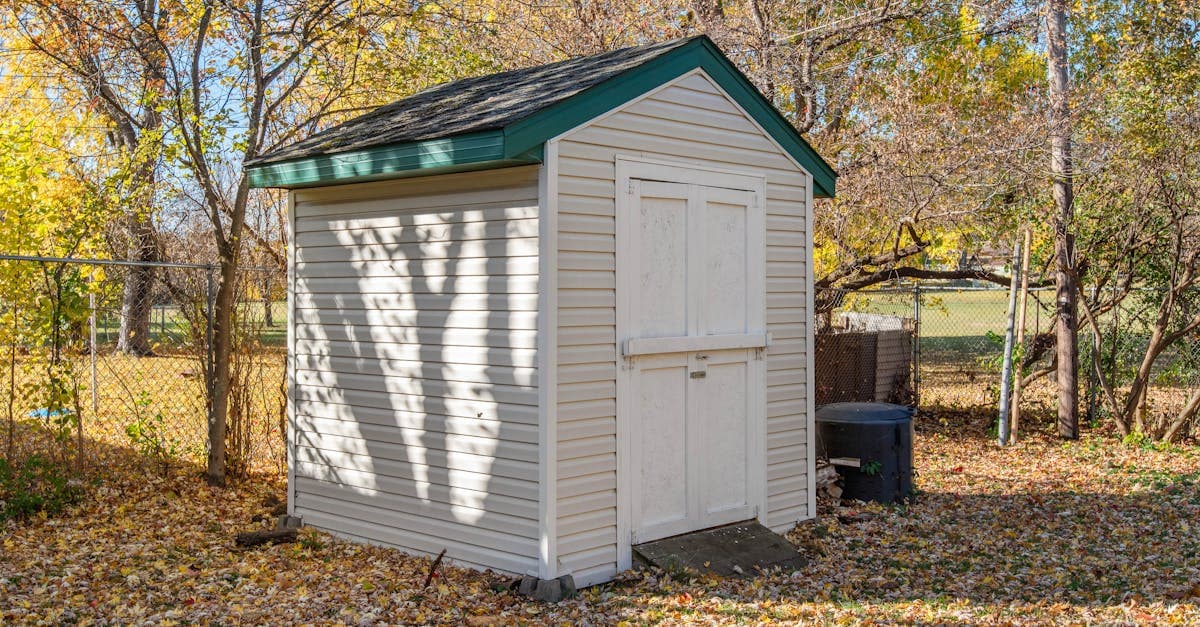
Other structures coverage has been a standard component of homeowners insurance since the Insurance Services Office created the first standardized policy forms in the 1950s. Designated as Coverage B, it was designed to extend property protection beyond the main dwelling to the full footprint of detached buildings and structures on the insured property.
In the earliest homeowners policies, most properties had modest detached structures — perhaps a separate garage, a storage shed, and a fence. The 10 percent default limit relative to dwelling coverage was generally adequate for these basic structures. Few homeowners needed to think about whether their Coverage B limit was sufficient.
The modern American property has evolved considerably. Today's homes may include detached workshops, pool houses, elaborate outdoor living structures, guest cottages, home office buildings, and extensive fencing and landscaping structures. The aggregate replacement cost of these detached structures can easily exceed the traditional 10 percent formula.
Climate change has also increased the relevance of other structures coverage. More frequent and intense storms mean more wind damage to fences, more hail damage to shed roofs, and more fallen trees crashing into detached garages. The perils that trigger Coverage B claims are becoming more common and more severe.
Today, other structures coverage deserves the same level of attention that homeowners give to dwelling coverage. Understanding Coverage B, verifying the limit, and adjusting for the actual replacement cost of all detached structures on your property is an essential part of comprehensive homeowners insurance planning.
Fallen Tree Damage to Detached Structures and Debris Removal
What happened next changed everything. Fallen trees are one of the most common causes of damage to detached structures. Understanding how Coverage B handles tree damage and debris removal ensures you get the full benefit of your other structures coverage after a tree-related incident.
Tree falls on a detached structure: When a tree falls on your detached garage, shed, fence, or other structure, Coverage B pays for the structural repair or replacement. The coverage applies whether the tree was on your property or your neighbor's property — what matters is that the tree damaged your structure.
Tree removal from the structure: Most homeowners policies cover the cost of removing a fallen tree from a damaged structure as part of the Coverage B claim. If a tree is lying on your collapsed shed, the cost of cutting and removing the tree to access the damaged structure is included.
Tree removal from the yard: Removing a fallen tree from your yard — when it has not damaged any structure — is handled differently. Many policies provide limited coverage for tree removal even when no structural damage occurred, typically $500 to $1,000 per tree up to a policy aggregate.
Multiple structures damaged by one tree: A single large tree can damage multiple detached structures — falling across a fence line and hitting a shed, for example. All damage from the same fallen tree is one occurrence with one deductible, regardless of how many structures are affected.
Preventive tree removal: Coverage B does not pay for removing healthy or hazardous trees before they fall. Preventive tree maintenance is a homeowner responsibility. However, maintaining your trees and removing dead or hazardous ones reduces the risk of a future Coverage B claim.
Neighbor's tree on your structure: If your neighbor's tree falls on your detached structure, your Coverage B pays for your structural damage. You do not need to pursue your neighbor's insurance — your policy covers damage to your structures regardless of the tree's origin.
Fence Coverage and Small Structures: Common Coverage B Claims
What happened next changed everything. Fences, mailboxes, retaining walls, and other small structures generate some of the most frequent Coverage B claims. While individual claim amounts are often modest, understanding how these claims work helps you navigate the process efficiently.
Fence replacement costs: A 200-foot wood privacy fence costs $4,000 to $10,000 to replace depending on materials, height, and your local market. Vinyl fencing of the same length costs $5,000 to $12,000. Wrought iron or aluminum fencing ranges from $6,000 to $15,000. Chain link is the most affordable at $2,000 to $5,000.
Common fence damage scenarios: Fallen trees and branches are the leading cause of fence claims. High winds can push over entire fence sections, particularly wooden fences with deteriorated posts. Vehicle impact — a car leaving the road and hitting your fence — is also a covered peril.
The deductible problem with small claims: On a fence claim of $3,000 with a $2,500 deductible, Coverage B pays only $500. For small structure claims, the deductible can consume a large portion of the payout, making it worth considering whether filing a claim makes financial sense.
Retaining walls: Permanent retaining walls on your property may qualify for Coverage B when damaged by covered perils. Collapse from erosion or earth pressure may be excluded as earth movement, but damage from fallen trees or vehicle impact is typically covered.
Mailboxes and light posts: Permanent mailbox structures, decorative lamp posts, and yard fixtures are covered under Coverage B when damaged by covered perils. Vehicle impact is the most common cause of mailbox and light post claims.
Matching and replacement challenges: When a storm destroys one section of fence, matching the replacement panels to existing sections can be difficult. Your Coverage B claim should cover the cost of replacement materials that reasonably match the original, though matching is not always guaranteed.
Inventorying Your Detached Structures and Reviewing Your Coverage B Limit
The story does not end there. The single most important step you can take to ensure adequate other structures coverage is creating a complete inventory of every detached structure on your property and comparing their combined replacement cost to your Coverage B limit.
Step one — walk your property: Physically walk the perimeter and interior of your property, identifying every detached structure. Include obvious structures like garages and sheds, but also note fences, retaining walls, mailbox structures, lamp posts, gazebos, pergolas, garden structures, and any other permanent features not attached to the main home.
Step two — estimate replacement costs: For each structure, estimate the replacement cost. Use current local construction costs, not the original cost of the structure. A shed you built for $3,000 ten years ago might cost $5,000 to replace today. A fence installed for $6,000 might cost $10,000 at current material and labor prices.
Step three — calculate the total: Add up the replacement costs of all detached structures. This total represents your Coverage B exposure — the amount you need in other structures coverage to fully protect every detached building and structure on your property.
Step four — compare to your limit: Check your homeowners declarations page for your Coverage B limit. If your total replacement cost exceeds this limit, you need to increase your coverage. Contact your agent with your inventory and request a limit adjustment.
Step five — photograph everything: Take photographs of every detached structure from multiple angles. Document the condition, materials, and any special features. Store these photos digitally in a location accessible even if your property is damaged. This documentation speeds up the claims process after a loss.
Step six — review annually: Repeat this inventory annually and after adding any new detached structure. New fencing, a new shed, or any other addition changes your total exposure and may require a Coverage B limit increase.
Fence Coverage and Small Structures: Common Coverage B Claims
What happened next changed everything. Fences, mailboxes, retaining walls, and other small structures generate some of the most frequent Coverage B claims. While individual claim amounts are often modest, understanding how these claims work helps you navigate the process efficiently.
Fence replacement costs: A 200-foot wood privacy fence costs $4,000 to $10,000 to replace depending on materials, height, and your local market. Vinyl fencing of the same length costs $5,000 to $12,000. Wrought iron or aluminum fencing ranges from $6,000 to $15,000. Chain link is the most affordable at $2,000 to $5,000.
Common fence damage scenarios: Fallen trees and branches are the leading cause of fence claims. High winds can push over entire fence sections, particularly wooden fences with deteriorated posts. Vehicle impact — a car leaving the road and hitting your fence — is also a covered peril.
The deductible problem with small claims: On a fence claim of $3,000 with a $2,500 deductible, Coverage B pays only $500. For small structure claims, the deductible can consume a large portion of the payout, making it worth considering whether filing a claim makes financial sense.
Retaining walls: Permanent retaining walls on your property may qualify for Coverage B when damaged by covered perils. Collapse from erosion or earth pressure may be excluded as earth movement, but damage from fallen trees or vehicle impact is typically covered.
Mailboxes and light posts: Permanent mailbox structures, decorative lamp posts, and yard fixtures are covered under Coverage B when damaged by covered perils. Vehicle impact is the most common cause of mailbox and light post claims.
Matching and replacement challenges: When a storm destroys one section of fence, matching the replacement panels to existing sections can be difficult. Your Coverage B claim should cover the cost of replacement materials that reasonably match the original, though matching is not always guaranteed.
Inventorying Your Detached Structures and Reviewing Your Coverage B Limit
The story does not end there. The single most important step you can take to ensure adequate other structures coverage is creating a complete inventory of every detached structure on your property and comparing their combined replacement cost to your Coverage B limit.
Step one — walk your property: Physically walk the perimeter and interior of your property, identifying every detached structure. Include obvious structures like garages and sheds, but also note fences, retaining walls, mailbox structures, lamp posts, gazebos, pergolas, garden structures, and any other permanent features not attached to the main home.
Step two — estimate replacement costs: For each structure, estimate the replacement cost. Use current local construction costs, not the original cost of the structure. A shed you built for $3,000 ten years ago might cost $5,000 to replace today. A fence installed for $6,000 might cost $10,000 at current material and labor prices.
Step three — calculate the total: Add up the replacement costs of all detached structures. This total represents your Coverage B exposure — the amount you need in other structures coverage to fully protect every detached building and structure on your property.
Step four — compare to your limit: Check your homeowners declarations page for your Coverage B limit. If your total replacement cost exceeds this limit, you need to increase your coverage. Contact your agent with your inventory and request a limit adjustment.
Step five — photograph everything: Take photographs of every detached structure from multiple angles. Document the condition, materials, and any special features. Store these photos digitally in a location accessible even if your property is damaged. This documentation speeds up the claims process after a loss.
Step six — review annually: Repeat this inventory annually and after adding any new detached structure. New fencing, a new shed, or any other addition changes your total exposure and may require a Coverage B limit increase.
How the Coverage B Limit Works and When to Increase It
The story does not end there. Your other structures coverage limit is typically calculated as a percentage of your dwelling coverage — most commonly 10 percent. Understanding how this limit works and when it needs to be increased is critical to ensuring your detached structures are fully protected.
The 10 percent default: On a homeowners policy with $400,000 in dwelling coverage, the default Coverage B limit is $40,000. This $40,000 must cover the repair or replacement of every detached structure on your property combined. It is a shared pool, not a per-structure limit.
When the default is adequate: For properties with minimal detached structures — a small storage shed and a basic fence — the 10 percent default may be sufficient. If the total replacement cost of all detached structures is well below the default limit, no adjustment is needed.
When the default falls short: Properties with detached garages ($25,000 to $55,000 to rebuild), extensive fencing ($5,000 to $15,000), workshops ($15,000 to $40,000), pool houses ($20,000 to $60,000), or multiple outbuildings can easily exceed the default limit. Any property where the combined replacement cost of detached structures exceeds 10 percent of the dwelling limit needs a Coverage B increase.
How to increase your limit: Contact your insurance agent to request a Coverage B limit increase. Most insurers allow you to set Coverage B at 15, 20, or even 25 percent of your dwelling limit, or at a specific dollar amount. The additional premium for increasing Coverage B is typically modest — often $50 to $150 per year for a meaningful limit increase.
Reviewing after property changes: Any time you add a detached structure — building a shed, installing a fence, constructing a gazebo — contact your agent to review your Coverage B limit. The new structure increases the total replacement cost of your detached buildings.
The inventory approach: Create a list of every detached structure on your property, estimate the replacement cost of each, and add them up. Compare the total to your Coverage B limit. This simple exercise reveals whether your coverage is adequate or whether a gap exists.
How Your Deductible Works With Other Structures Claims
What happened next changed everything. Your homeowners deductible applies to Coverage B claims the same way it applies to dwelling coverage claims. Understanding the deductible's impact on other structures claims helps you make informed decisions about filing and about your deductible level.
One deductible per occurrence: If a single storm damages your detached garage, shed, and fence, you pay one deductible for the entire claim — not a separate deductible for each structure. All damage from the same covered event is treated as one occurrence.
Deductible impact on small claims: Many other structures claims involve relatively modest amounts — a $3,000 fence repair, a $2,000 shed roof fix. With a $2,500 deductible, a $3,000 claim yields only $500 from insurance. Consider whether filing a small claim is worthwhile given the deductible and potential impact on your claims history.
Percentage deductibles and Coverage B: In areas with hurricane or wind deductibles based on a percentage of your dwelling coverage, the same deductible applies to Coverage B claims triggered by the same named storm. A 2 percent deductible on a $400,000 dwelling policy is $8,000 — which could exceed the total damage to your detached structures.
Separate event, separate deductible: If a windstorm damages your fence in March and a tree falls on your shed in June, these are separate occurrences with separate deductibles. Each event requires its own deductible payment.
Strategic deductible considerations: Homeowners with multiple detached structures may want to consider their deductible level in the context of likely Coverage B claims. A lower deductible provides more meaningful payouts on the moderate-sized claims that are typical for other structures, while a higher deductible reduces premiums but may make small to mid-size claims uneconomical to file.
Combined dwelling and other structures claims: When the same event damages both your main home and detached structures, both Coverage A and Coverage B are triggered by the same occurrence. You pay only one deductible for the combined claim, not separate deductibles for each coverage section.
How the Coverage B Limit Works and When to Increase It
The story does not end there. Your other structures coverage limit is typically calculated as a percentage of your dwelling coverage — most commonly 10 percent. Understanding how this limit works and when it needs to be increased is critical to ensuring your detached structures are fully protected.
The 10 percent default: On a homeowners policy with $400,000 in dwelling coverage, the default Coverage B limit is $40,000. This $40,000 must cover the repair or replacement of every detached structure on your property combined. It is a shared pool, not a per-structure limit.
When the default is adequate: For properties with minimal detached structures — a small storage shed and a basic fence — the 10 percent default may be sufficient. If the total replacement cost of all detached structures is well below the default limit, no adjustment is needed.
When the default falls short: Properties with detached garages ($25,000 to $55,000 to rebuild), extensive fencing ($5,000 to $15,000), workshops ($15,000 to $40,000), pool houses ($20,000 to $60,000), or multiple outbuildings can easily exceed the default limit. Any property where the combined replacement cost of detached structures exceeds 10 percent of the dwelling limit needs a Coverage B increase.
How to increase your limit: Contact your insurance agent to request a Coverage B limit increase. Most insurers allow you to set Coverage B at 15, 20, or even 25 percent of your dwelling limit, or at a specific dollar amount. The additional premium for increasing Coverage B is typically modest — often $50 to $150 per year for a meaningful limit increase.
Reviewing after property changes: Any time you add a detached structure — building a shed, installing a fence, constructing a gazebo — contact your agent to review your Coverage B limit. The new structure increases the total replacement cost of your detached buildings.
The inventory approach: Create a list of every detached structure on your property, estimate the replacement cost of each, and add them up. Compare the total to your Coverage B limit. This simple exercise reveals whether your coverage is adequate or whether a gap exists.
The Bottom Line on Other Structures Coverage
Think of other structures coverage as the diversified portfolio that spreads protection across every asset on your property, not just the primary investment. It extends protection beyond your front door to every detached building and structure on your property, standing between your investment and the concentrated risk of protecting only your main home while thousands of dollars in detached structures remain completely unhedged.
The coverage is straightforward but requires one key action: verifying that your Coverage B limit matches the combined replacement cost of all your detached structures. The default 10 percent formula is a starting point, not a guarantee of adequacy.
Master these basics — know your limit, inventory your structures, compare the numbers, and adjust if needed — and your other structures coverage will function as intended: ensuring that every detached building on your property can be repaired or rebuilt after a covered loss.
The protection exists. The question is whether the limit matches your actual exposure. Take twenty minutes to answer that question, and your entire property — not just your main home — will be fully covered.
Continue reading

The 10 Things You Must Compare Before Choosing an Insurance Policy
Premium price is just one of at least ten critical factors that determine whether an insurance policy delivers genuine value. Ignoring any of these factors can leave you underinsured or overpaying.

Policy Checkup After Having a Baby: Protecting Your Growing Family
A new baby means new financial responsibilities, life insurance needs, and coverage adjustments. A policy checkup after your child arrives ensures your family's protection matches its new size.

Assignment of Benefits vs Direction to Pay: Key Differences Explained
A direction to pay tells the insurer to send the check to your contractor. An AOB transfers your legal claim rights entirely. The distinction matters enormously for your protection.